Showing posts with label poor soil. Show all posts

Tuesday, January 28, 2014

Free online Permaculture Design Course


FREE PERMACULTURE DESIGN COURSE
Complete Online Self-Paced Program
Learn from World-Class Instructors

Complete 72+ Hour Permaculture Design Certificate Course Covers:

  • Natural building construction
  • Pattern observation and site analysis
  • Renewable energy and appropriate technology
  • Reading the land and natural cycles
  • Rainwater harvesting and conservation
  • Soil regeneration and land restoration
  • Passive and active solar design
  • Food forests, trees, and garden design
  • Greywater considerations and system design
  • Business and financial permaculture
  • Waste recycling and treatment
  • Urban permaculture for sustainable cities
  • ...and much, much more!

Course Instructor: Larry Korn (translator of Fukuoka's book One Straw Revolution) and other world-class teachers.

Friday, January 02, 2009

January tasks for the Mediterranean gardener

New Year tasks for the Mediterranean gardener.

January has brought cold Siberian winds to the garden as 2009 dawns. The early morning frosts have been a welcome blow against the Tiger Mosquito which tried to establish itself in L’Alt Empordà during the warmer summer days; the eradication initiatives in the coastal plain seem to be effective, though it seems colonies may persist in the south of Girona province.

 Now it is time to deal with Garden jobs for January.

  • Large Trees should by now of been pruned to shape. Timber from those trees should be cut and stacked in dry airy conditions to provide firewood for the cold spell next year. If you try to burn the freshly cut wood it will fill your house with smoke and provide little heat.
  • Shrubs too should be cut back to stimulate fruit production and flower buds where that occurs on new seasons growth. Chop up the cut branches and leaves and incorporate them into your compost heap.
  • Compost heaps will benefit from being turned to introduce a little air into the material, ensure the heap is damp and firm down to stimulate the biological action. Dry material will not decompose.
  • Worm activity falls off as the temperature declines and frost can kill those valuable garden friends. Place your wormery in a sheltered spot and consider insulation to maintain temperature. Remember to keep the bed damp but not wet and feed the worms.
  • Cultivation - Rainfall rare as it has been has softened the earth and will provide an opportunity to cultivate the soil. Bed preparation will be assisted by any frost which will break down soil with higher clay content.
  • Compost from the previous year’s heap should be added to freshly dug ground where it can be dug in to help boost soil fertility.
  • Mulch - Heavy rain such as we experience here in our particular Mediterranean Garden can compact the soil quite badly. A heavy mulch of fibrous compost from our heap helps to minimise the damage and the worms will pull the material into the soil.
  • Bamboo canes are grown as windbreaks throughout Spain they are plentiful and the canes can be cut and dried for a supporting role in your garden. The bamboo wood is easier to make holes in whilst still fresh so if you need to add holes for wires and fixings do it as soon as you have harvested the bamboo.

Thursday, May 15, 2008

Comfortable with the comfrey

Our comfrey plants were sourced from eBay and arrived as five rather uninspiring small black coloured pieces of the sellers plant division. After a few weeks they have generated five young plants which give us hope for the future of our composting process which is in need of leafy nitrogenous material. The first year we will concentrate on building the plants up both in scale and in number.  In subsequent years comfrey will play an important role in the garden as we do battle with our poor aluvian soil. 


The snails and slugs seem to have nibbled at this specimen though not too much damage is visible in the photograph, considering the thousands of snails resident on our plot. The little though frequent rain we have had in recent weeks means that the birds are rather enjoying the spring with ample food supplies. Thrushes have helped out with the snail control as is evident by the empty shells we are finding. As far as is possible we like to rely on natural solutions it is just a case of finding the right balance.

Sunday, December 02, 2007

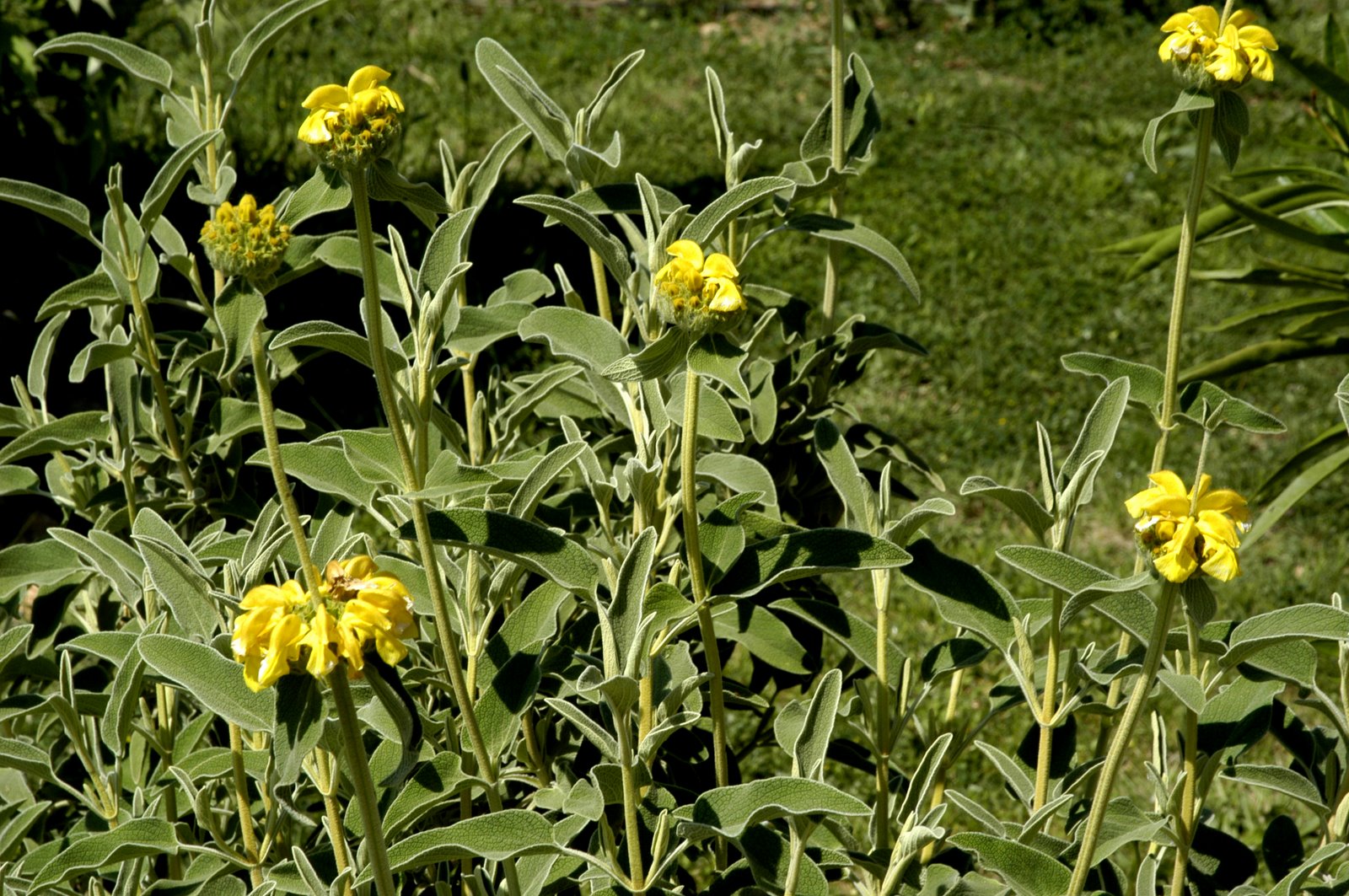
Phlomis lanata - Jerusalem sage


Phlomis lanata or Jerusalem sage was an introduction to the garden this year it's sage coloured leaves are hairy like many Mediterranean plants a useful mechanism for capturing moisture when the humidity is high. Although this is a tough plant and can tolerate the hottest and driest conditions it is none the less a showy plant with many bright yellow blooms. The flowers which appear in two stages are held above the plant by almost leafless stems. First a ruffled collar of flower blossom opens, the stem continues to grow several inches before producing a more compact flower at the shoot tip. This plant is attractive to pollinating insects too.

Tuesday, October 31, 2006

Recycle your garden waste.

Ever wondered what happens to the organic waste taken to the local authority waste collection points?

 Here in Spain after being turned into compost it is bagged and sold to the public, the cost of a 50 litre bag is €3.60; cheaper than the ordinary commercial stuff which is around €7 for a similar bag. It is very fiberous and  adds much needed bulk to the top layer of soil.

We hope to generate our own compost as we develop the garden though we have a long way to go yet before we will be self sufficient.

Fortunately for us many Mediterranean garden plants will thrive on poor soil given a little help in the early seasons.

Friday, May 19, 2006

Preparation counts


The secret of success at anything in Spain is La machina!

A machine is the answer to any problem you can imagine, labour saving gadgets are technology at it´s most welcome.

Trying to work the land with conventional spade and fork is impossible. Even previously turned ground often needs to be broken open with a pick!

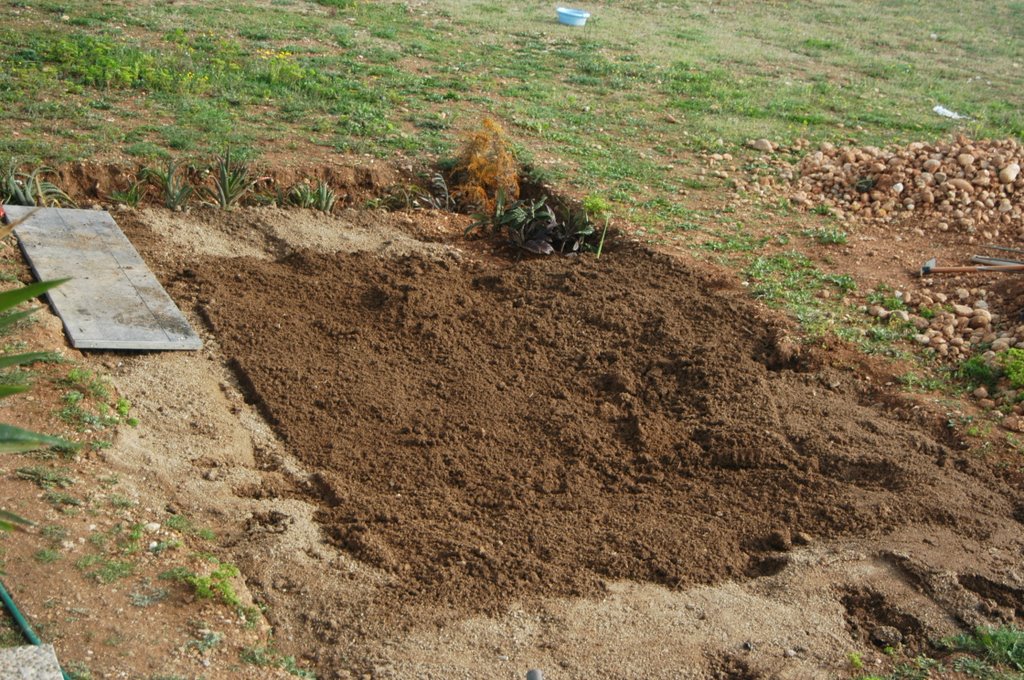
Destined to become a flower bed at the south side of the villa this hole in the ground was excavated by the JCB digger in only 30 minutes. 

The soil was then hand riddled to remove the rocks and weeds, weeks of hard work. 

Manure which had been composted for one year was added. To the best of the soil we added 30 tonnes of purchased top soil which looked little better than the dust we had removed.

Sunday, August 21, 2005

Heaps of fun!


This photograph gives some idea of the scale of our task. Soil heaps containing weeds seeds and stones will have to be riddled by hand. 

Enterprising landscape contractors working nearby offered to take the soil away, as did a farmer who is leveling his own fields. The soil no matter how poor is still a valuable commodity.