

Sunday, February 16, 2014


Tuesday, February 11, 2014
Free app test your garden with Mysoil app
mySoil App | Growing our knowledge

mySoil
App | Growing our knowledge
mySoil gives you access to a comprehensive European soil properties map within a single app. Discover what lies beneath your feet and help us to build a community dataset by submitting your own soil information.


mySoil Reviews
 ‘Fantastic to have this information in the palm of your hand when you're on site.’
Dean Morrison
‘This is a really interesting App. While of great practical
use to gardeners, it also a gives a fascinating insight into where
geological changes take place.’TrickyOnWhat
‘Excellent little free app. Informative and helpful and has been useful for gardening by telling me soil type and ph.’Nogbad the bad
Partnership
mySoil has been made possible through collaboration with several major research organisations, including:


European coverage
Discover the latest soil mapping data from across Europe.More detailed data is available for UK.


Soil information
Learn more about the soil beneath your feet with up-to-date information; including soil pH, texture, depth, organic matter and temperature.Citizen science
mySoil need your help!Join our growing community by submitting your own soil data to help us better understand this precious resource.

Tuesday, January 28, 2014
Free online Permaculture Design Course
FREE PERMACULTURE DESIGN COURSE
Complete Online Self-Paced Program
Learn from World-Class Instructors
Complete 72+ Hour Permaculture Design Certificate Course Covers:
- Natural building construction
- Pattern observation and site analysis
- Renewable energy and appropriate technology
- Reading the land and natural cycles
- Rainwater harvesting and conservation
- Soil regeneration and land restoration
- Passive and active solar design
- Food forests, trees, and garden design
- Greywater considerations and system design
- Business and financial permaculture
- Waste recycling and treatment
- Urban permaculture for sustainable cities
- ...and much, much more!
Course Instructor: Larry Korn (translator of Fukuoka's book One Straw Revolution) and other world-class teachers.
Thursday, February 02, 2012
Utopia - Wislawa Szymborska R.I.P. ( Poems )
....Solid ground beneath your feet.
The only roads are those that offer access.
Bushes bend beneath the weight of proofs.
The Tree of Valid Supposition grows here
with branches disentangled since time immermorial.
with branches disentangled since time immermorial.
The Tree of Understanding, dazzling staight and simple.
sprouts by the spring called Now I Get It.
sprouts by the spring called Now I Get It.
The thicker the woods, the vaster the vista:
the Valley of Obviously.
the Valley of Obviously.
If any doubts arise, the wind dispels them instantly.
Echoes stir unsummoned
and eagerly explain all the secrets of the worlds....
and eagerly explain all the secrets of the worlds....
Sunday, November 13, 2011
Reforestation of City Space Milan, Italy
Architects have been struggling with the incorporation of renewable energy components into their projects as demanded by planning authorities. An example being solar panels on tower blocks in city centers. The electricity generated is intended to be used for space heating and ; the problem is that roof space is a relatively small area and incorporating technology into building facades is costly and not always effective.
Stefano Boeri has a different approach in his Vertical forest, Bosque Vertical
for apartment blocks in Milan, Italy.

Stefano Boeri has a different approach in his Vertical forest, Bosque Vertical
for apartment blocks in Milan, Italy.

Tuesday, November 08, 2011
William and Catherine Christmas Caganers

Christmas in Cataluna sees the addition of two new Caganer figurine figures for your christmas nativity scene,
Prince William and Catherine (Duke and Duchess of Cambridge).
Here they are shown wearing their wedding outfits, and having assumed the position of the pooping caganer.
See previous post on Obama Caganer here to learn about the tradition of this fertility symbol.
Tuesday, November 01, 2011
Caga Tió - Christmas in Catalunya, Spain

Christmas is coming and the poop logs are in the shops click on the link above the photograph to read about them
Monday, October 31, 2011


Sunday, October 09, 2011
Fira de la Poma L'Armentera 2011

Cartell 2011 obra d'Inés Bordas
Local artist Inés Bordas was chosen to produce the poster for this years 'Fira de la Poma' (Apple Fair) in the town of L'Armentera.
The apples are now harvested and off to market.
Friday, July 22, 2011


Monday, May 23, 2011


Saturday, May 21, 2011

Piquancy in salad leaves


To add add a splash of welcome colour and a hint of piquancy to your salad leaf mix try growing giant red mustard leaves.
Pick the leaves when small and the plant will continue to produce,
it is also capable of standing through a mild winter before going to
seed in late spring. Save the seed for more salad leaves.


Friday, April 08, 2011
Bats in the mediterranean garden.
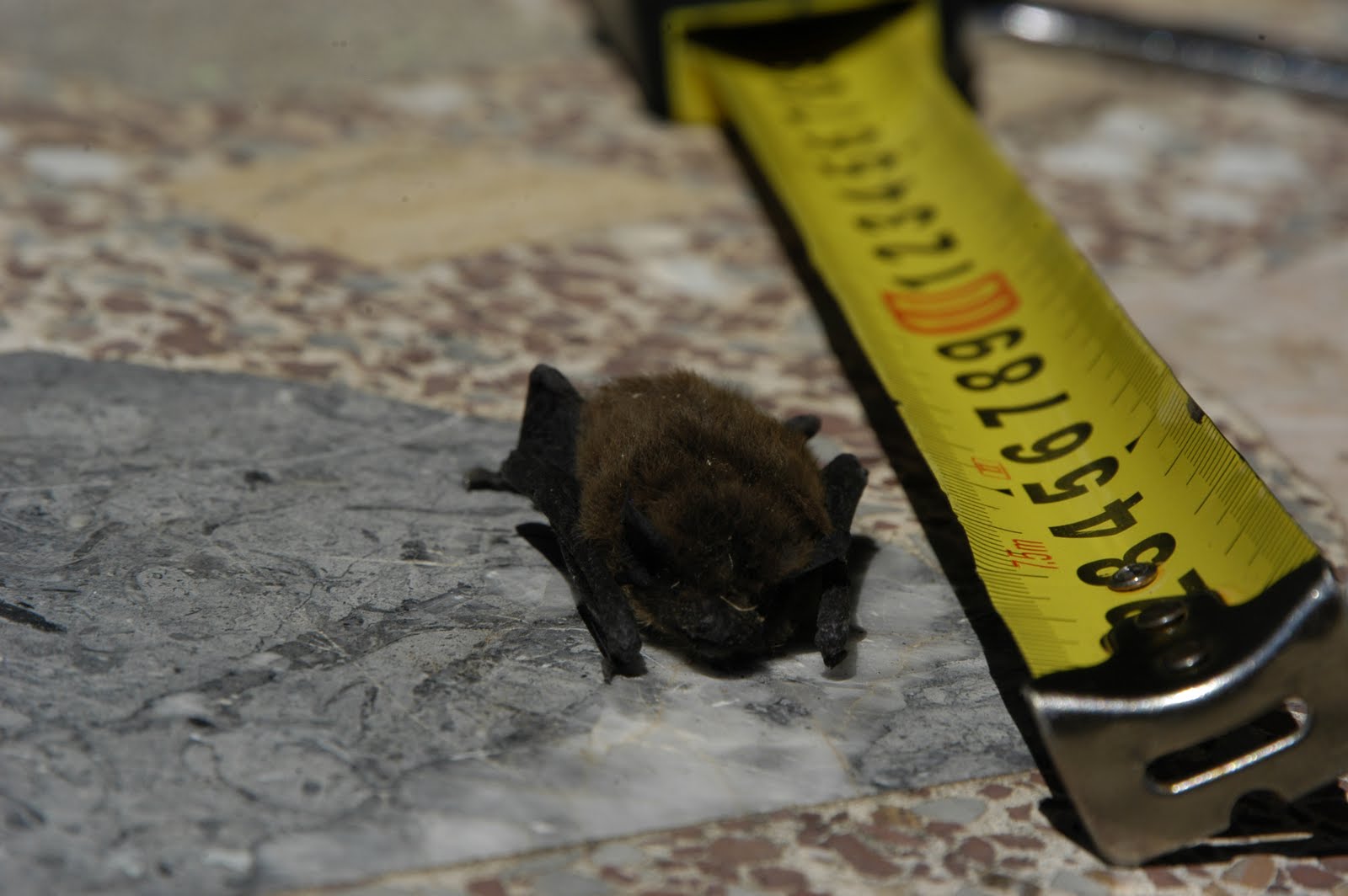

Although this bat was dead when I found it in the garden, we appear to have a healthy colony of bats living in the top of our disused water tower. Each evening as the sun sets over the mountains we see them emerge. Their effectiveness at insect pest control is often debated but they are always welcome visitors in our garden.
On an evening we often see bats praying on night flying insects under the street lights of our village. Particularly on roundabouts along the highway.
Friday, February 25, 2011
Primavera peeps through Mediterranean winter
Spring is definitely in the air, in the garden and surrounding land blossom adorns the branches of the cherry trees and the Hoopoe is claiming territory ready for the breeding season.
Got a head start in the vegetable beds by visiting the supermarket and buying a packet of Thai organic vegetables which were rapidly approaching their sell by date. The bag contained garlic, shallots and lemon grass which I rooted before planting out in the raised beds. The Garlic and shallots are thriving. It might still be a bit cool for the lemon grass but well worth a punt.
It was March the 8th. last year that heavy snowfalls blanketed L'Alt Empordà wiping out power supplies for several days. Hopefully we haven't jumped the gun.
Tuesday, February 08, 2011
Achatina Fulica Giant snail invades Spain

Achatina Fulica the east african giant snail is now resident in Andalusia in southern Spain. As if we don't have enough snails of our own. This invader is known to carry several parasites which are dangerous to humans who should avoid contact with the pest. The snail should never be eaten without intensive cleaning. Consumption has proven fatal to animals.
Categorized as one of the worst on the invasive species on maturity the snail can reach 20cms long (8"). It feeds on all manner of vegetation, bones, sand and even concrete. It is able to seal itself inside its own shell enabling the snail to survive droughts as long as three years.
Sunday, February 06, 2011
GM lobby opens door to EU food chain

Photograph: Martin Argles for the Observer
Relaxing the EU's zero-tolerance position would greatly benefit US feed exporters. The push for Europe to drop its zero-tolerance policy began in 2009 after EU authorities found traces of GM maize in soy shipments from the US and refused to allow its entry. Such recalls are expensive and those affected are unlikely to receive compensation.
GM supporters warn that the current zero-tolerance policy could result in a dramatic shortage of feed for livestock. But critics dismiss the claims as scaremongering and say there is no evidence to back up them up.
"This is a solution without a problem, and the price could be very high indeed when unknown genetically modified organisms are let loose in the food chain," said Eve Mitchell, food policy adviser at Food and Water Europe, a campaign group.
"Rather than ignoring EU food safety laws to help the US soy industry cut costs, we should simply buy the stuff from countries that segregate their GM properly. If it hasn't been tested, why eat it?"
Many of the GM crops, notably soy and maize, that have been found in animal feed imported into Europe are resistant to multiple herbicides. Critics blame these new GM crops for the recent rise of "super weeds" across vast tracts of the US farm belt.
Friends of the Earth Europe said it had obtained expert legal advice questioning the legality of the EU's plan. But European regulators believe that allowing the import of animal feed containing no more than 0.1% of GM traces does not jeopardise food security.
Jamie Doward
Saturday, February 05, 2011
Repairing garden hand tools - Mattock


This post illustrates how to fix the wooden shaft onto the head of the various garden tools that are sold in Spain, in this case a mattock. The metal wedge which secures the shaft is called a cuña heirro forjado.
If you have to buy a new shaft for your garden hand tools, a good garden tip passed onto me by a blacksmith or farrier; is to rub up and down the handle with a hammer head or metal shaft, thereby flattening the grain and polishing the handle. A light coat of linseed oil will help keep the handle weather proof and comfortable in the hand.
Thursday, February 03, 2011
Grafting citrus fruits -

If you like us are still praying that the winter has been kind to your citrus, here is something you could achieve if you master the green art of grafting. The citrus tree in the picture carries 81 different varieties of fruit, all grafted by Joe Real the owner of the tree. Read his description of what he has achieved and see further photographs by clicking on the link.
Thursday, January 27, 2011
Winter weather weary, bring on Spring
Madrid (EP) .- The General Directorate of Civil Defense and Emergencies of the Ministry of Interior warned by minimum temperatures "many areas of the country" and "especially" in Catalonia.
Thus, Civil Protection warns that the minimum temperatures are very cold in many parts of the country and which may extend to -10 degrees Celsius to the regions of Catalonia.
Estate agents when selling you a house often tell you that,
Whilst sitting on your patio you can pick your own lemon for your Gin and tonic...
They never tell you that you can take the ice from the swimming pool to chill your Gin and tonic too!
Wednesday, January 26, 2011
Fruit squash

We bought a juicer and have been playing around with recipes with both fruit and vegetables for their health promoting benefits; but today we have been outclassed.
Down the road in Lleida a wagon overturned whilst carrying 39,000 kilos of oranges; thankfully nobody was hurt!
Subscribe to:
Posts (Atom)