Showing posts with label Compost. Show all posts

Monday, December 27, 2010

Organic composting guide - online

If you are beginning composting or would like to understand what goes on in your heap an ebook


will help and guide you; in choice of materials,siting the heap and constructing a compost box. The guide will also inform you of the nutriment available to plants within your compost.

Saturday, October 25, 2008

Stoking up the boiler

Alan Titchmarsh the television gardening presenter refers to the compost heap as the boiler house of the garden. Our particular boiler has in recent days been recharged with the shredded prunings from the Mulberry trees. 

Antonio down at the restaurant in Vilamala has been persuaded to supply me with the coffee grounds from the overworked machine in that establishment, they too have added into the heap.

 I thought I would ask Olga & Angel fellow restauranteurs, if they too would save their coffee grounds for our compost. Olga said she would but when I next visited the premises, she said that she had mentioned the arrangement to her father a fellow landowner, who had told Olga to forget about the coffee grounds as he would supply me with a sack of  ‘animal abono’ i.e. goat and horse manure. His gift was greatly appreciated, and he has promised that from time to time he will provide a sack of the same mix. The Manure provided a good heart for the heap and helped the composting process to fire up the heap.

 It was whilst on another trip to Banyoles to show the lake to our most recent visitors; that I saw another golden garden opportunity. On the edge of the lake, I saw glistening in the light of the setting sun a pile of recently deposited horse manure. I told my companions that if I had had a sack with me I would have claimed the heap as my own.

 After a walk along the shore of Lake Banyoles we returned to the car and again passed by the heap of ‘horse do’. Carol trying to be helpful said that if I really wanted the manure she would unpack the shopping and provide me with the carrier bags for that purpose. Using one bag as a glove I scooped up the manure and filled the second bag before returning to the car. As I reached the car my passengers all three, slammed their door shut to prevent me from asking them to hold the precious cargo on the return journey.

 On arrival at the Finca back at the pueblo I added the fuel to the ‘boiler house’ and considered it a job well done. That evening Carol and Joan stayed in to watch a television show. John and I visited Antonio’s bar and utilised the WiFi link on the premises to do a little route planning for their onward journey to Cadiz, and from there a ferry ride to the Canary Isles i.e. Santa Cruz de Tenerife. The journey having been planned I checked in to the Mediterranean Garden Spain web site.

John read a few pages from our blog and was surprised at the scale and distribution of garden blog readers around the world. 

John then said “I bet you daren’t tell your blog readers that you picked up horse crap, in the street”. 

I replied that, indeed I would dare to do so, and further more that if I did tell our readers about the dark and dreadful deed, I would be obliged to tell those same folk, that he John the builder from Castle Donnington shrieked like a young girl when I asked him to carry the bag. 

So John, ‘Me Duck’ consider the story told.


Monday, July 28, 2008

Garden boost


This is the Bosch shredder I picked up on Ebay for £50 it sells here for 300€ which is around £250, quite a saving. The machine is working quite well so far and can handle stems of up to 1” quite comfortably. Composting should become more efficient too.

Friday, November 16, 2007

Ever composted road kill?

If you have ever considered adding road kill to your compost this article which was published in 2006 makes interesting reading. The roads here are littered daily with the carcasses of ferrel cats, badgers, wild boar and birds. The policy of the junta seems to be not to remove the dead animals, which are crushed by the volume of traffic and the remains scavenged by other wild creatures.

I have on the past added small quantities of animal remains birds, frogs, fish from my pond and a mummified cat I found whilst renovating an old pool. The feather, hair and meat elements break down readily but the bones tend to be problematic; maybe a grinder of sorts would do the trick.

Having read the full article and knowing that there is a saw mill nearby I am still a little dubious about collecting the carcasses for my bin.

Composting Road killed Deer
by Elisabeth Kolb

Researchers in New York State are studying an alternative method for disposing of animals killed in roadway collisions.


This mule deer was struck by a motor vehicle while attempting to cross Yellow Head Highway 16 just west of Prince George, British Columbia, Canada. Determining what to do with roadkilled deer carcasses is the topic of ongoing research sponsored by NYSDOT.

Tuesday, October 31, 2006

Recycle your garden waste.

Ever wondered what happens to the organic waste taken to the local authority waste collection points?

 Here in Spain after being turned into compost it is bagged and sold to the public, the cost of a 50 litre bag is €3.60; cheaper than the ordinary commercial stuff which is around €7 for a similar bag. It is very fiberous and  adds much needed bulk to the top layer of soil.

We hope to generate our own compost as we develop the garden though we have a long way to go yet before we will be self sufficient.

Fortunately for us many Mediterranean garden plants will thrive on poor soil given a little help in the early seasons.

Friday, May 19, 2006

Creating compost


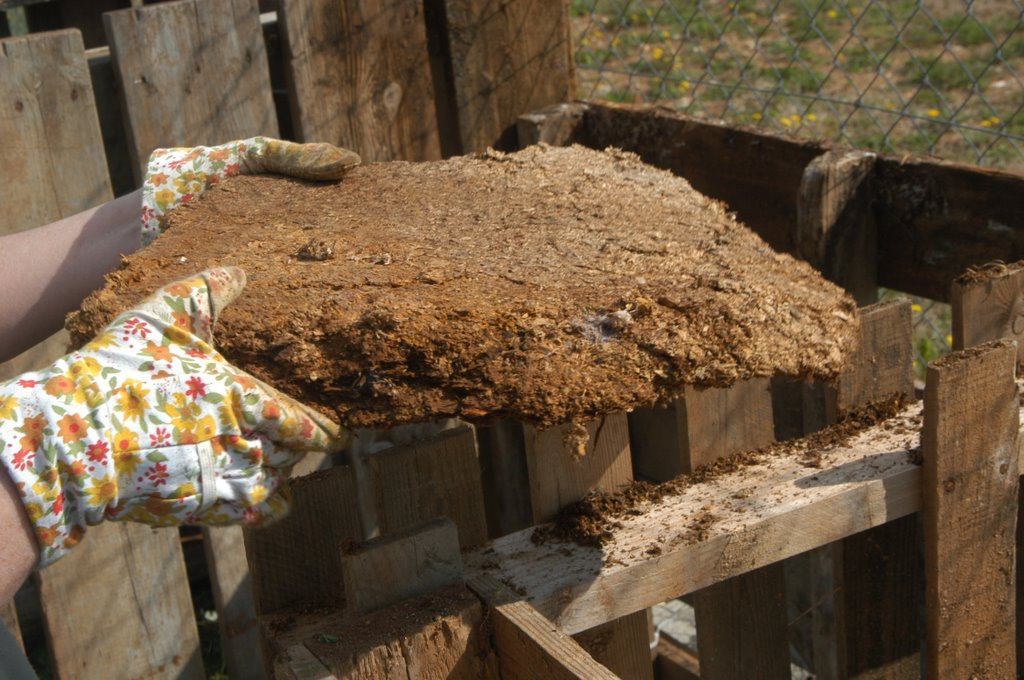
All of the old stable bedding made up of compressed wood chippings and horse urine will be the base for the heap. 

After a one winter it is starting to break down a little, when it was first composted it resembled very dense chipboard.

Sunday, May 14, 2006

Firing up the heap


Given the absence of plant material we have to resort to other waste to help with the composting process. One of the items we incorporate is shredded paper, to help get it going I place kitchen waste in the centre and dampen the paper which is contained in a black plastic refuse sack.

It would seem that the black coloured bag holds the heat from the sun; and warms up the material inside which in turn activates the decay process in the kitchen waste, which is insulated by the paper. After a week to ten days I mix it all in the heap.


Compost - Heaps of fun


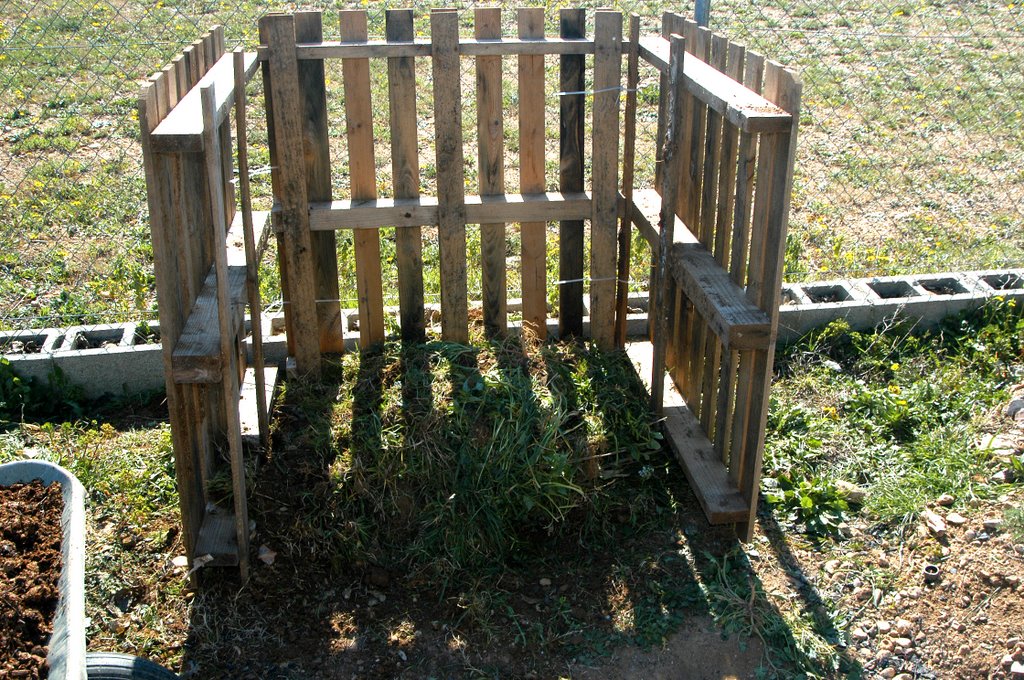
Wooden pallets form the bins for the composting process. With so little green material around even quite robust weeds are added having taken care to remove all the rootstock. 

Carol has got the hard work of cutting up all the foliage to fuel the process.

Monday, July 19, 2004

Soil


I used a meter to test the soil, it showed that the land has a Ph of 6.5 a neutral reading that suggests that a wide range of plants could be grown.

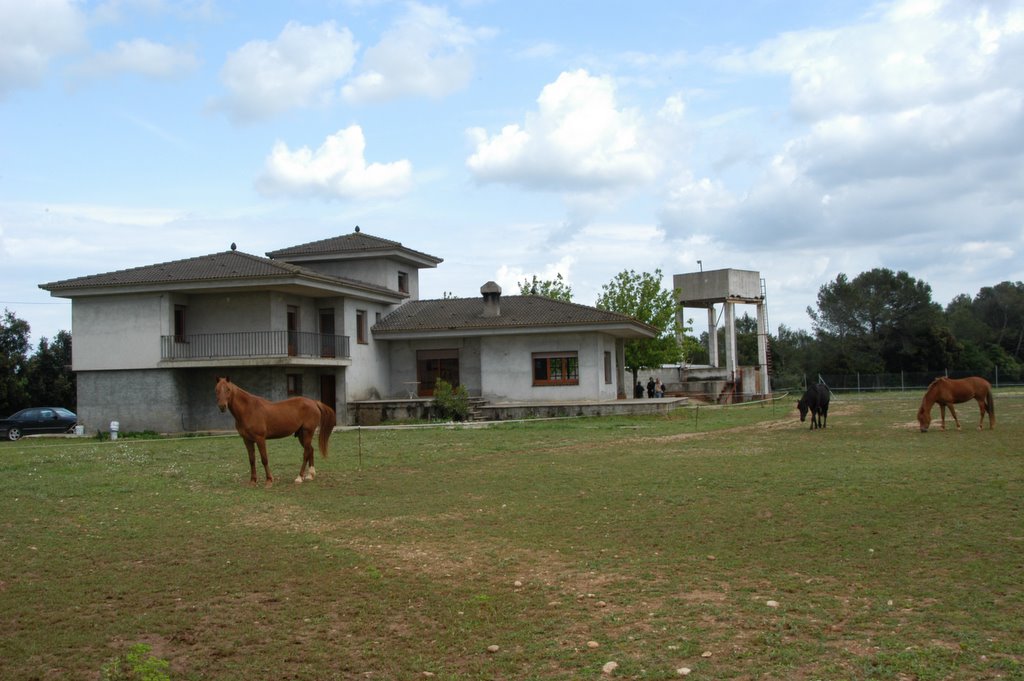
The granular structure of the soil is very fine almost dust like. Despite keeping three horses the land had never been manured. Horse dung was left to lie uncomposted, the waste from the stable was piled at the finca boundaries but unturned; and given to anyone who would carry it away.

Stones were embedded in the soil surface and littered the adjoining farm land. It was only when we tried to dig it that we realised just how bad the land was; so bad we may have to plough it.

In the finca the field shown in the previos post we shall probably plant more trees.