Showing posts with label Propagation. Show all posts

Monday, August 17, 2009

Tamarix (Tamaricaceae) Tamarisk

Tamarisk can be deciduous or evergreen shrubs and trees. Mild areas produce trees that are very wind-resistant and therefore they are often used as barrier hedges in exposed coastal areas. They like a sunny position in well drained fertile soil; where they produce abundant racemes of small pink or white flowers in the summer.

Spring time is the optimum time to prune trees and hedges, and it is then that the new growth of purple stems contrasting with the blue grey foliage gives a second season of interest. Semi ripe cuttings are easy to propagate.

Here in northern Catalunya farmland which has been reclaimed from marshland is rich and fertile and produces apples, peaches and pears in profusion. The farmland extends down to the beaches of the Costa Brava and is subject to high winds; it is the Tamarisk which is used to separate the agricultural land from the Mediterranean sand carried by the wind. Anybody who has used the campsites around the coastal region will have sheltered behind the Tamarisk tree.

In some parts of the USA the Tamarisk has become an invasive species and is weeded out of the native forests.

I have seen fine examples of a specimen tree and will try to add a photograph to this entry.

Sunday, May 10, 2009

Fuchsia Futures - Easy propagation & Care.


You may have killed them with kindness. That would be my diagnosis on the failure of your fuchsia cuttings to germinate. If you are new to plant propagation and would like a fool proof method of germinating small quantities of fuchsia plants from existing plants; then the following method may help you.

  • Take your cuttings from non flowering stems 3" to 4" long and from just above a leaf joint.
  • Pinch out the growing tip and shorten any large leaves by half.
  • Using an opaque container i.e. a plastic beaker, to hold your cuttings.
  • Place the cut stems in a little water in the container, ensuring that the leaves are clear of the water.
  • Change the water every three days.
  • After 10 - 14 days you will see roots forming at the base of the stem. Pot up the rooted cutting in your usual manner.


The opaque container will help to diffuse (soften) the light, place it near to a window but out of direct sunlight.

Fuchsias do grow in Spain but are best kept out of the hot summer afternoon sun. If your patio or balcony specimens have suffered from the heat a solution would be to double pot them.
Using a larger pot than you plant is growing in place any inert material such as polystyrene around the circumference of the outer pot and place your potted plant in the middle of the outer pot. You have created a thermal barrier between the roots of the Fuchsia and the outer pot which will absorb the sunshine.

Once the sun has gone down water and feed your plants. Misting the foliage with water will prevent red spider mite. Fuchsia do best if the roots are restricted if you are potting on young plants do so 1/2 a pot size at a time. I find a very dilute feed more often gives the best results.+

Sunday, January 13, 2008

Golden shower

Bignoniaceae Pyrostegia - the Flame vine; is a native of India and is commonly known as Golden shower. This has to be one of the showiest of the garden climbers and is reminiscent of the honeysuckle. Those flowers are more wax like than wax itself. In the photograph the first of the flowers are just open, though in a few days the others will follow. Dark green foliage compliments those hot orange flowers.


This plant climbs be entwining it's tendrils around any supporting object and as such is easy to train along fences and walls. Though the flowers are short lived the plant repeat flowers throughout all but the coldest months. A plant that has to be kept frost free the base of the plant should be protected from freezing weather with heavy mulching or by wrapping the stems. Containerized specimens can be brought inside.

We will attempt to propagate cuttings from the golden shower later in the year.

Thursday, November 29, 2007

Buttonholed


Read this post at The Mediterranean Garden, Spain. In it's original form and as intended by the authors Colin and Carol.

This flower was propagated from the buttonhole I wore at a family wedding many years ago, or rather this bloom is derived from that original plant which is still in our UK garden. Over the years I intended to do much more of that kind of propagation but did get around to it. I wish I had done so, because the plants that you associate with friends and family are the most special plants in your garden, no matter how humble the plant is.

We have over the years, shared many of our plants with family and friends and have in return, though not quite as often received others in exchange. Favourite plants include a climbing hydrangea from my parents home and day lilies from Carol's parents home. Some plants came with a dire warning about their invasive tendencies; such as Creeping Jenny donated by old Phil many moons ago. I don't resent this weed like plant, instead when I have to dig it out, which is very often these days I think of Old Phil and smile. We should plant more smiles in gardens don't you think?

Tuesday, February 13, 2007

Glimmer of hope.


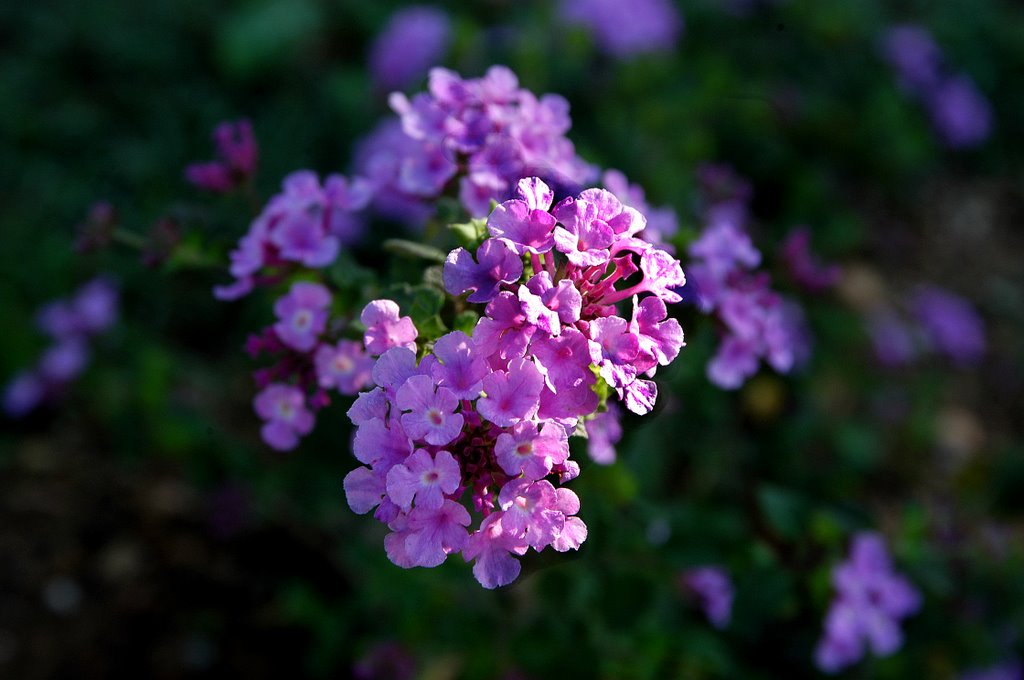
Seed sowing is now underway, although the forecast is for more bad weather next week the daylight hours are numerous enough for the plants to grow. The seeds of the Lantana pictured here were saved last autumn and are amongst those that are to be sown. The woody seed pods pictured on a previous post have been opened with more than a little firm persuasion and a few of those seeds have been sown too.

Northern European Winter and Spring seem to ebb and flow like the tide and its easy to get caught out by the arrival of a sudden cold snap. The heated propagator and cold frames help to stabilise the planting environment and lengthen the growing season to make seed raised plants a viable and cost effective way of gardening.

Southern Europe seems to have a much shorter winter period and the Mayor of the Spanish village where our Mediterranean garden is situated feels that, 'winter here lasts only three weeks'. I hope she is right. Though I know that our neighbour Joan flies off to Brazil for a month as soon as he needs to remove the ice from his swimming pool, winters here can be cold but are usually quite dry. He also keeps his prized collection of finches indoors a little longer than that three week winter, before Springtime allows them the freedom of his aviary.

After winter has slowed down the pace of the garden year, Spring arrives with a flourish of wild flowers and instills a sense of urgency into the gardener. Weeds prosper when your back is turned and there is much clearing up to do, and there are beds that will need to be prepared for planting. Cultivating your garden without digging seems an attractive proposition but living in the countryside with those millions of airborne weed seeds makes it a little unlikely at the moment.

Tuesday, November 21, 2006

The late show

Colder nights will soon put an end to the colourful late blooms in the garden. The seed catalogues are starting to arrive and the planning for next years show begins in earnest.

The low sun gives a very directional light which accentuates the form of spiky flowers like this.
Softer morning light gives reduced contrast and is more suited to delicate blossom and fine detail.

There are still some late flowering plants like the Hebe which are producing enough non flowering shoots to enable cuttings to be taken and I will try them, if they do not root now springtime will give me a second opportunity to strike cuttings taken from the same plants.

Friday, November 10, 2006

Plants for free


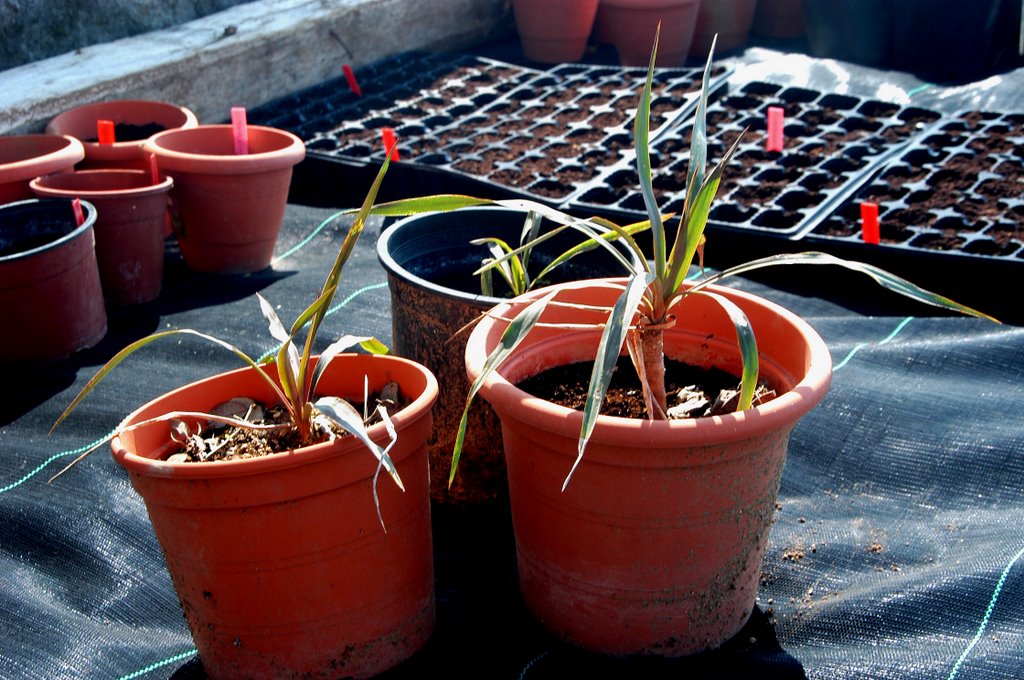
These suckers from the base of one of the Yucca plants that I bought seem to be developing nicely. They should be useful additions to the garden within a year or two.

This variety has points at the end of the leaves but they can be easily snipped off without damaging the plant. Although they are common Mediterranean plants they do help to add structure to the garden especially when grouped together. Repeating the same variety can also I believe help to unify a garden design.

Saturday, August 19, 2006

Lily Fireking


These Lilies have flourished despite changing colour and becoming paler , if they continue to develop it might be possible to divide them next spring. The bulbs were bargains at €1 each.

Wednesday, July 19, 2006

Moving plants


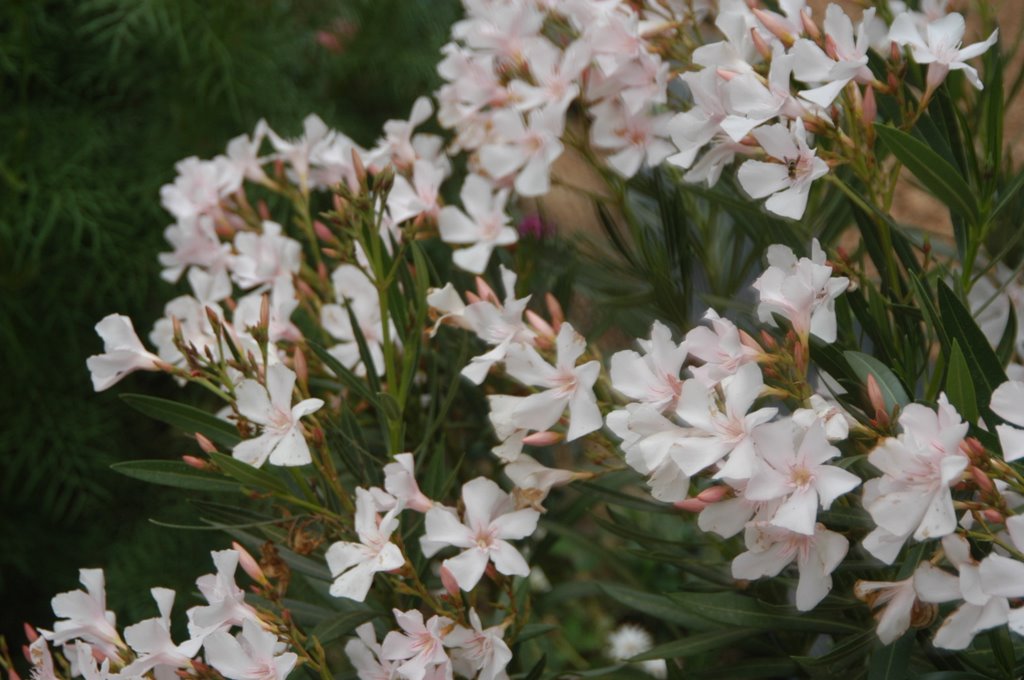
Nerium Oleanders are supposed to dislike disturbance. Last year I lifted a flowering 1.5 metre specimen which I divided into two and then relocated. The two new plants are thriving with a fantastic flower show this year.

Sunday, June 04, 2006

Rooted cuttings


This is an example of an aloe plant that somebody else discarded. When I found it it was just a broken stem but after six weeks has developed a healthy root system. The flowers when they come are quite striking orange spikes on a yellow base not unlike the red hot poker plant.

Thursday, June 01, 2006

New lavender bed


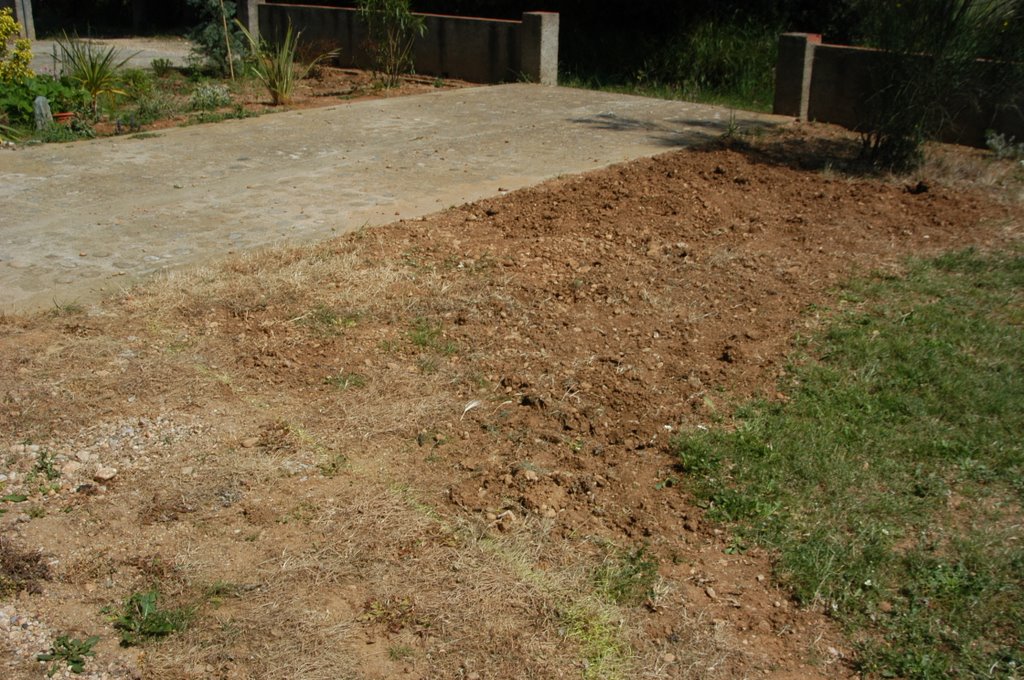
Clearing the ground for a new bed, this bed will be on the left side of the path to the front door of the villa and gets sun from early morning. The house casts shadow on half of the bed from mid afternoon though the rest of the ground gets sunshine all day long. Facing north it is subjected to strong winds quite often , although a low garden wall will give a little protection to low growing plants.

Sunday, March 19, 2006

An early start- nursery area


We have decided to establish a nursery area on the south west side of the house to benefit from the spring sunshine.

The ground has been covered with weed proof membrane which was then surrounded by our next years fire-wood, beetle infested beams

Friday, February 17, 2006

Seeds in the post I hope!

Phormium Rainbow Striped Hybrid 
Echinacea pallida 
Echinacea purpurea Magnus 
Helianthus annuus Russian Giant 
Penstemon barbatus Navigator 
Delphinium (Larkspur) ajacis Earl Grey
Dianthus Sp. Russian Skies 
Verbascum boerhavii bicolor 
Tagetes erecta Doubloon  
Datura metel Double Blackcurrant Swirl
Perennial Grasses Mixed  
Dianthus superbus Crimsonia 
White Angels Trumpet - Brugmansia suaveolens 
Banana : Ensete glaucum (Snow Banana)
African Daisy Duo [2 packets - 1 of each]
Baby Leaf Collection [5 packets] 
Melica altissima atropurpurea 
Phlox hybrida compacta 
Tradescantia x andersoniana 
Datura seraticaula 
Dianthus chinensis heddewigii  
Penstemon 'Minature Bells' 
Digitalis purpurea 'Alba' 
Lavender stoechas 
Thunbergia alata Blushing Susie 
Millet : Purple Majesty 

Saturday, February 04, 2006

Germination & Saved garden seeds.

I had spent many months collecting seed from my own plants and those of friends and family. Even on occasions knocking on the doors of strangers to ask for something I had seen growing in their gardens. Everyone I asked was more than willing to help me.

The seeds were dried in the sunshine and then packed into a sheet of paper kitchen towel, which was folded into a Beechams style packet to hold the precious seeds. The paper towel was labeled with felt tip pen and then each 'seed packet' was stored in a dry and airtight container until required.

One of the easiest ways to germinate seeds is the damp paper towel method. Simply,
  • Dampen the paper towel with luke warm water
  • Sprinkle the seed sparingly over the surface.
  • Fold up the paper towel
  • Place the towel into a plastic bag or container
  • Place the container in a warm but not a hot environment
  • Check after 48 hours for germination
  • Plant seedlings into a seed/potting compost
A very useful mini propagator can be made from old transparent muffin / cake containers. I have used them successfully to germinate the seeds as above. And I have also used them as small seed trays equipped with an inbuilt lid that can be easily opened as and when required.

The transparent containers have also been useful for storing soft fruit like my mulberries in the deep freeze.

If there is a downside it is that we shall have to eat more muffins.

Thursday, October 20, 2005

Salvage and recycling plants


The end of the tourist season has arrived and summer visitors are preparing their homes for the winter. Gardens are being overhauled and foliage cut back to rejuvenate tired looking plants for next year. The waste generated by this process has presented me with an opportunity to try and strike some late cuttings, from that waste material.

Some of the material I collected does not look very promising but if only a fraction of plants survive it will have been a worth while venture.

Tuesday, August 23, 2005

Granadilla


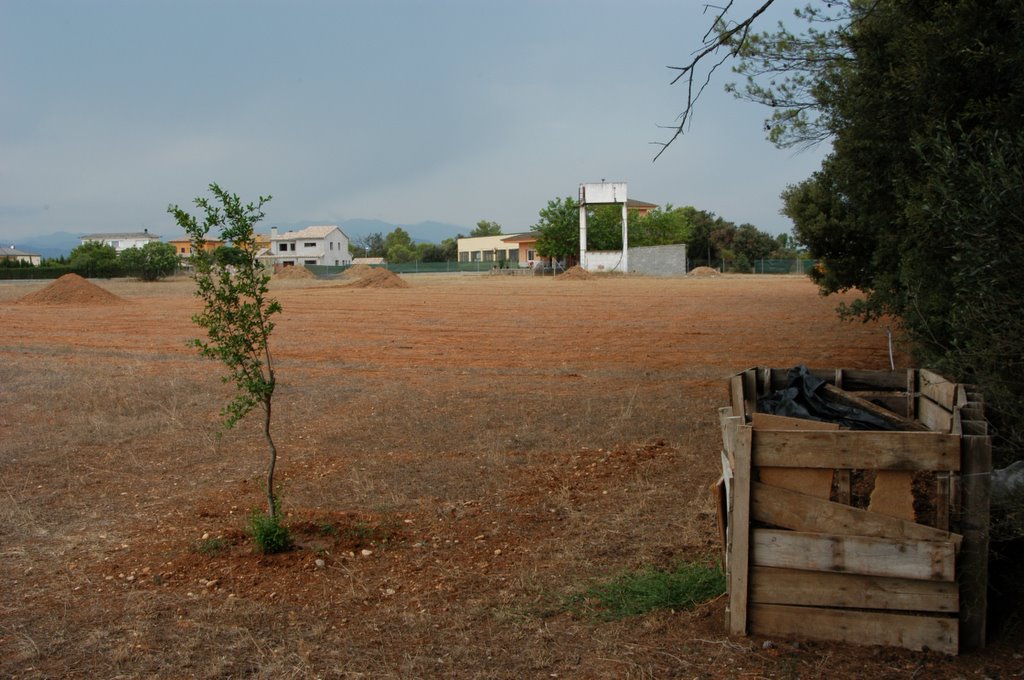
When I was young all those years ago, one of the first sign of approaching Christmas was the arrival of the 'pomegranate' fruit in the local green grocers. Now I have a chance to grow my very own fruit. The 'pomegranate' or 'Granadilla' as it is called in Spain is found in the most inhospitable of places, and grows well on impoverished soil. Now, impoverished soil we have plenty of, so our first fruit tree just had to be a pomegranate'.

The suckers at the base of the tree which can be seen on the photograph will be removed as soon as I am certain it has survived it's first winter. The suckers are unsuitable for propagation, though one year old wood cut at 12" - 15 " should root readily.

The fruit though fiddly to eat is quite refreshing; it's seeds are an ingredient in Asian cuisine, and the fruit and seeds juice readily.