Showing posts with label Piedra. Show all posts

Tuesday, December 05, 2006

Romancing the stone


The local river stones have been used to great effect here on the wall of this building they are obviously a lot stronger than the field stones that we have recovered from our land. Ours should be tough enough to construct low garden walls and edge paths, sometimes when I look at the piles of stones we have recovered it looks like we could build a town with them. These field stones are very mellow and should make an attractive edging material when combined with the grits we have also recovered.

Existing paths are made of rough and badly laid concrete, our plan is to cover them with the same materials we use on the new paths which should help draw the garden together. We will follow their lines because we know that water pipes are probably buried under them. When the house was first built it was not connected to the village water supply but instead used it’s own well.

Tuesday, September 05, 2006

Standing on the roman road - Wilma


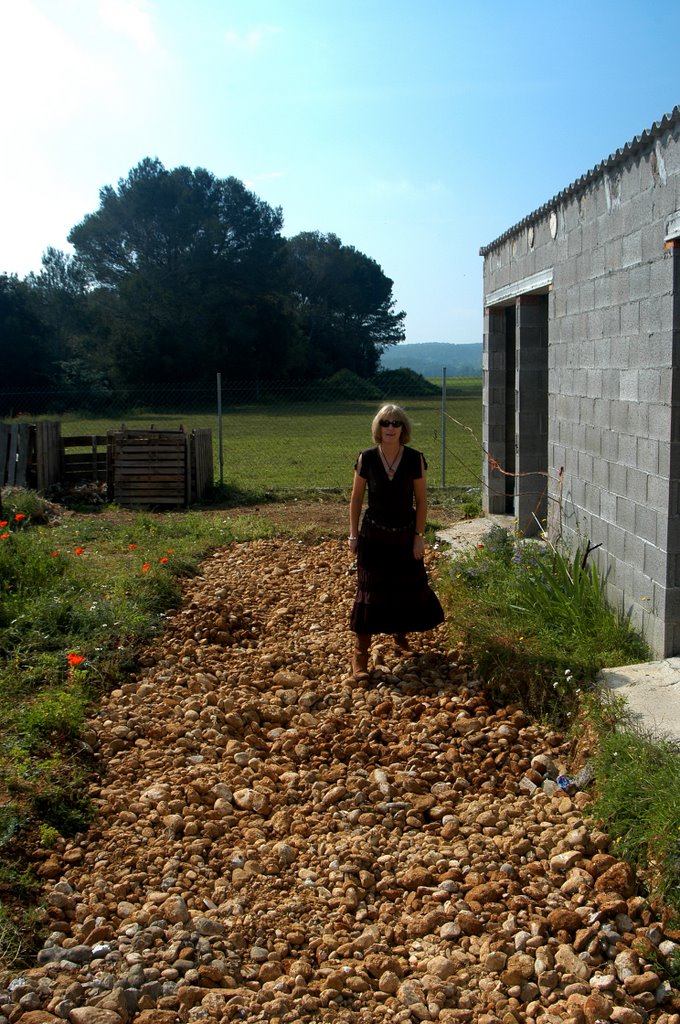
The pit of doom is now filling up, after all the metric tonnes of stones we have dug out of the garden; it now resembles a roman road. 

Somedays we feel like the Flintstones

Monday, January 30, 2006

Landscape design challenge


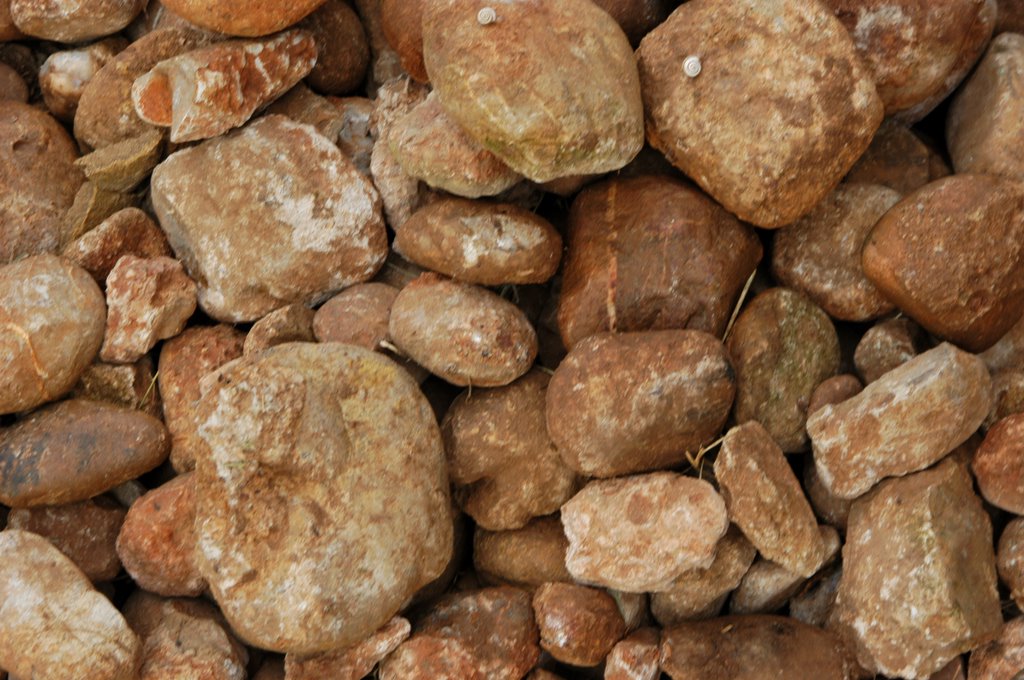
These are the rocks or 'piedra' that we are digging out of the ground. They have been found by riddling the soil by hand, once washed they will be graded into usable sizes . We are considering a number of options to utilise the stones which are abundant.

The 10 - 15 cm pieces will probably mark out the contour of the paths we form.

The 15 - 20 cm pieces will form the walls of raised planting areas.

The 20 - 40 cm pieces will be used to build a circular table with bench style seating.

Individual larger rocks will create steps were required.

Sunday, July 25, 2004

Piedra


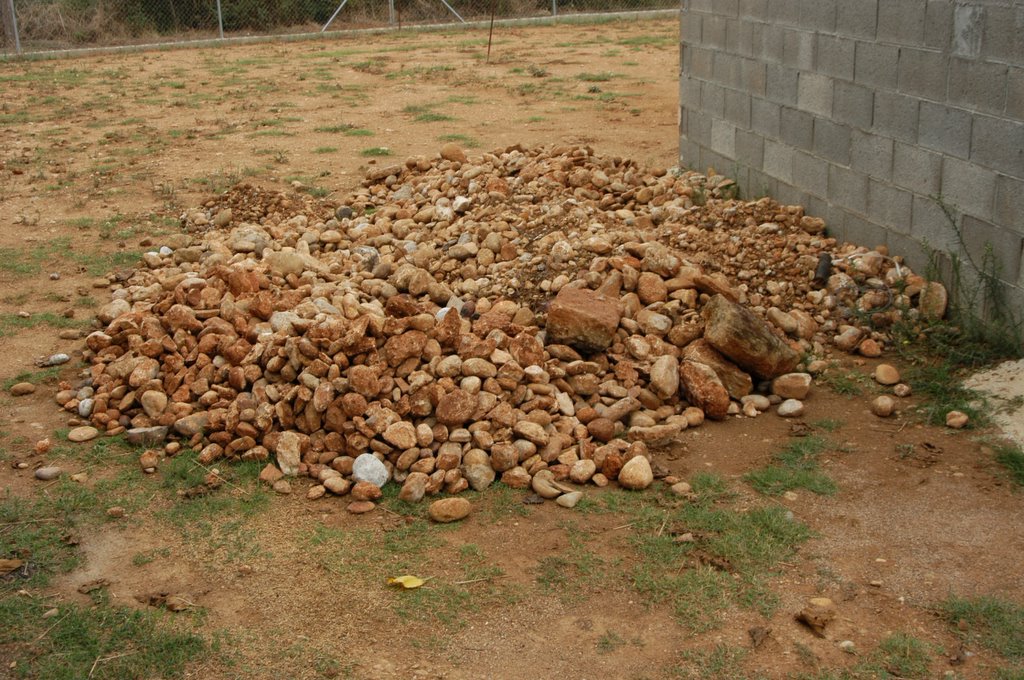
These are just a few of the field stones, which were embedded in the soil, that we removed by hand.

Barrow load after barrow load. It might be possible to utilise them in the creation of paths and garden features.

Piedra the local name for the rock is derived from Peter the rock on which Christ would build his church.

Many local builders utilised the rock in their construction technique. The rock which is quite soft crumbles in time making some of the buildings look even older than the are. Many of the villages can trace their history back to the middle ages which were also known as the 'dark ages'. I prefer to use the term 'dark ages for the present time because we have a dodgy electricity connection.