Christmas holidays saw our return to Tenerife in the Spanish Canary Isles which lay just 90 Kms. off the west coast of Africa. Due to the year round mild climate which averages 82 degrees F. the islands are known as the Fortunate Isles, ideal for snowbirds like Carol. Most of our latest trip seemed to be spent in the offices of the inmobillaria. Los Cristianos in particular seems to be home to the world collection of real estate vendors. Given the high level of prices for what is apparently poor quality property in Tenerife, the islands should be renamed the Fortune Isles.
We were looking for a large house on a sizable plot by Tenerife standards, were many of the older properties are little more than converted agricultural buildings. Our wish list was for a house of 200m2 on a plot between 2000 m2 and 10,000 m2. With the stipulation that it was within a short walk to the nearest village.
Our search took us inland looking at the area between Granadilla to the east and Guia de Isora to the west. Google earth gives a fair impression of the hilly terrain.
Above 550 metres high can be quite cool in winter and a bit hotter in summer so we tried to stick below that level on our search.
To Build, Buy, or Restore was our dilemma. A self build would probably be our favourite option. Though we tried to keep our minds open to the other possibilities too.
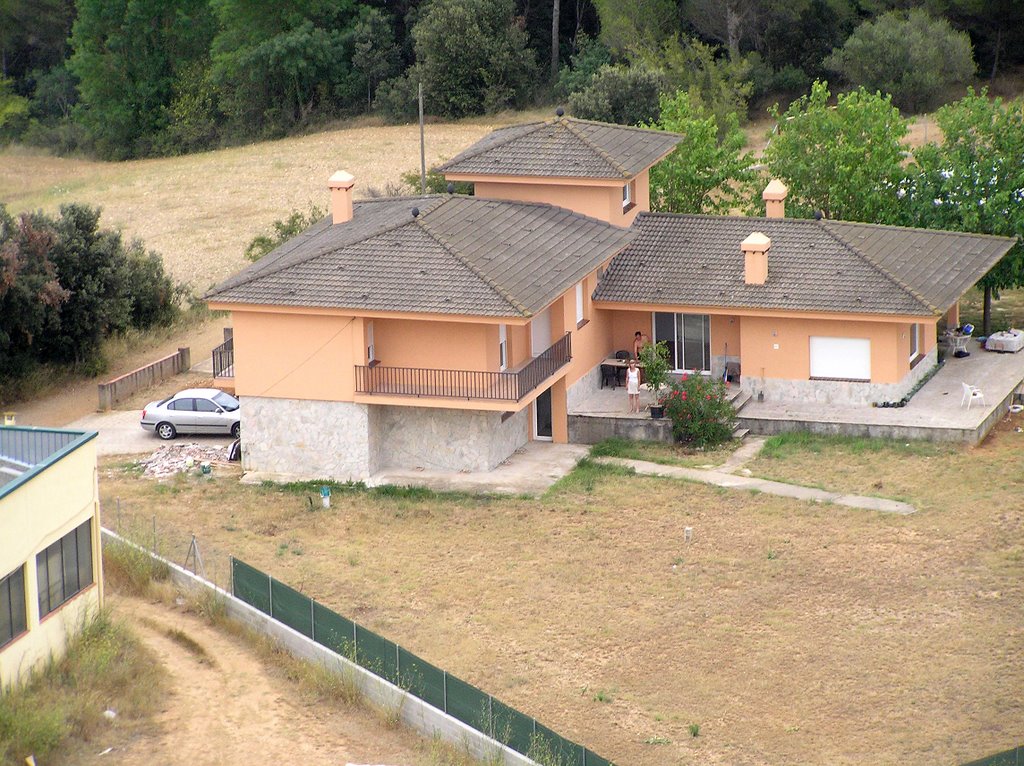
Modern or renovated Villas found in urban settings often had as little as 600 m2 of land. Far too small for us to make a new garden in, at least one that would occupy us in the years to come; even those on larger plots often had difficult access and rocky terrain.
Land in Spain which is designated as agricultural and is over 10,000 m2 allows you to build a house on 2% of that area. That could be bungalow style with a 200m2 footprint or a 100 m2 property footprint on two levels to give you 200 m2 of usable accommodation. Finding such a large plot near to a town proved to be impossible. Restoration was our other option. Older Spanish properties do not have insulation and they often come without central heating and double glazing. They also have flat roofs which are often used as solariums. Those solariums can prove to be a problem in older properties where poor maintenance allows water to enter the fabric of the house.
We were offered some interesting properties though none of them ‘ticked all the boxes’.
The garden elements of the properties we saw were often impressive with magnificent views over the Atlantic Ocean coastline across to the nearby islands of Gran Canaria and La Gomera. The mountainous terrain on the volcanic island of Tenerife is often tamed by the use of terraces; which create a pattern of narrow though fertile strips of land. This terraced feature is often seen in banana plantations and the cultivation of grape vines. A little rock in the land can be an asset when designing your garden if it is attractive i.e. weathed on the other hand if it is full of field stones like our present plot was then that is not so attractive.
The wide range of plants which can be grown in the mild climate also makes re-locating an interesting proposition to me. Colourful tropical species would be a delight to work with; blending them with the cactus and other desert plants in the arid zones would be the challenge. Is not that the type of challenge that keeps gardening interesting to so many people?