Showing posts with label Jerusalem sage. Show all posts

Tuesday, November 18, 2008

Salvia for the Garden Sage.


We have Mexico to thank for most of the Salvia plants that are commonly grown in Mediterranean climate gardens. Given free draining soil and a hot sunny position the Salvia plants will thrive, and require only a little light spring pruning to keep them within the bounds of their allotted space. Flowering can be extended by removal of the spent blooms as can most herbaceous or shrubby herbaceous plants. Tender young shoots are attractive to snails and slugs which may shelter under the plants dense foliage though the plant growth will be more than a match for the mollusc’s appetite. Only in very hot conditions should you need to add water; and generally prune the flagging Salvia plant rather than begin watering it. 

Sage is easily grown from seed or propagated by cuttings but there are specialist nurseries and national plant collections which can provide rarer occurring varieties of sage plants, and should you wish to try something out of the ordinary, you may also like to consider planting Phlomis such as the Jerusalem Sage in your Mediterranean style garden.

Culinary salvia known as sage in some countries is a mainstay of the western European kitchen and is often added to dishes to enliven their taste. 

"Why should a man die, who has sage in his garden?"

Known across Eastern Europe and Asia for centauries as a medicinal plant Sage was considered a treatment for snakebites.  The Herb monger has useful information on sage use (amongst other herbs).

Saturday, December 22, 2007

Foliage in the Garden

Cupresses Arizonica


With many garden flowers faded like those summer days the importance of foliage in the planting scheme is ever more apparent.


Coloured leaves which intensify or change their hue change dramatically the aspect of any garden.


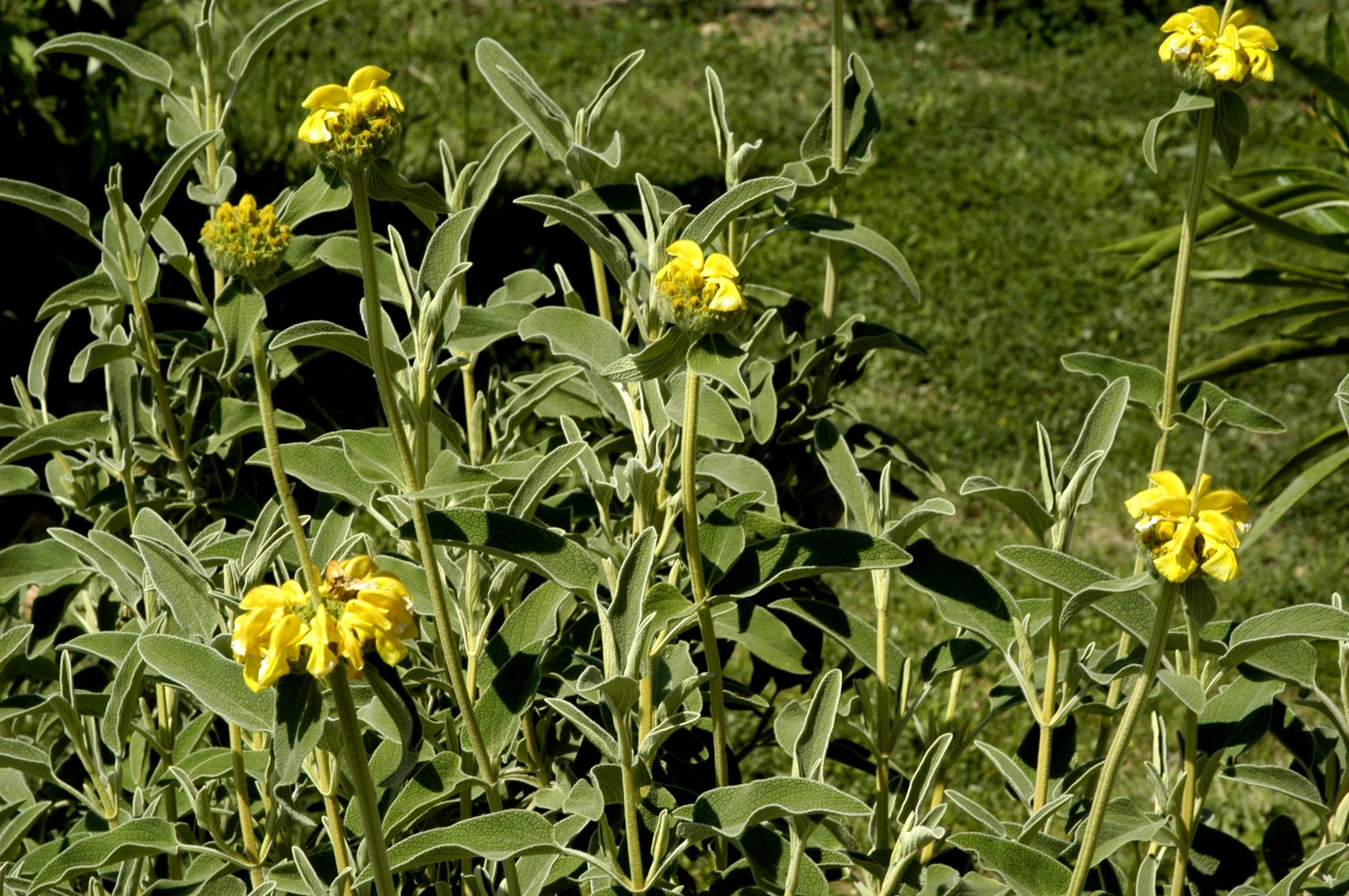
Jerusalem Sage
Leaves of many Mediterranean plant species have hairy leaves which serve to reflect the sun and also capture moisture from the humid air. Their texture contrasts sharply with glossy leaved varieties.

Sunday, December 02, 2007

Phlomis lanata - Jerusalem sage


Phlomis lanata or Jerusalem sage was an introduction to the garden this year it's sage coloured leaves are hairy like many Mediterranean plants a useful mechanism for capturing moisture when the humidity is high. Although this is a tough plant and can tolerate the hottest and driest conditions it is none the less a showy plant with many bright yellow blooms. The flowers which appear in two stages are held above the plant by almost leafless stems. First a ruffled collar of flower blossom opens, the stem continues to grow several inches before producing a more compact flower at the shoot tip. This plant is attractive to pollinating insects too.